Each month, an interesting aspect of the world’s oldest continuous maritime service will be highlighted. The men and women of the United States Coast Guard follow in the fine tradition of the brave mariners who have served before them. As sentinels and saviors of the seas, the United States Coast Guard proudly continues its commitment to honor, respect & devotion to duty to maintain their vigil – Semper Paratus.
A Captain’s Sacrifice
Lieutenant Junior Grade Robert Leven Grantham stared through the cockpit glass and it was clear that there was no way to avoid the dust storm that had quickly enveloped his aircraft. His hands gripped the controls tighter as he attempted to maintain his bearing in the maelstrom that had virtually appeared out of nowhere. It was as if Satan himself was stirring the sandy cauldron of hellishly high winds and reddish orange mixture of dust stirred violently from the wide empty expanses of the plains below. The aircraft quickly rocked in all directions from the wind shears and turbulence. Grantham, the commanding officer of the United States Coast Guard Air Patrol Detachment El Paso, Texas, and his three crewmen, were in for one hell of a ride.
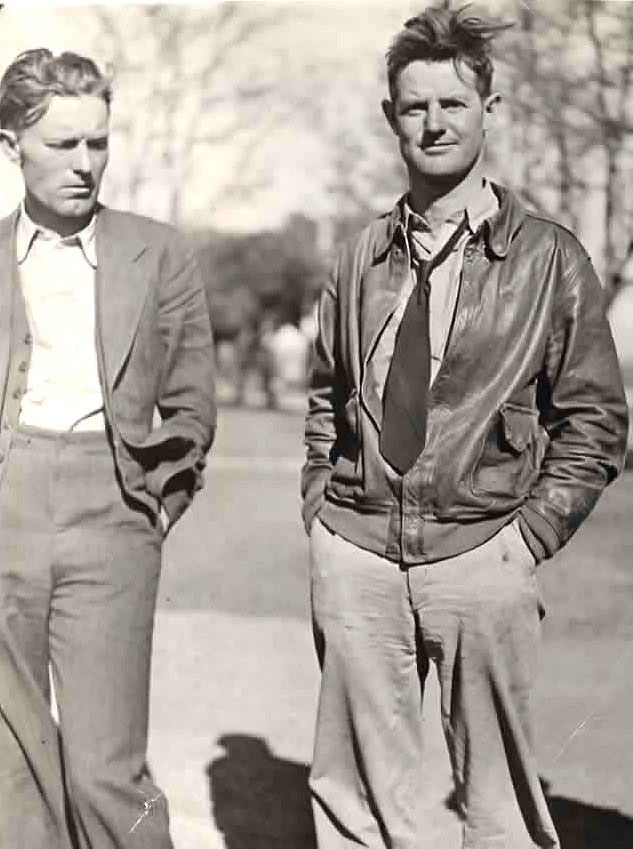
Lieutenant Junior Grade Grantham, hailing originally from Newbern, Alabama, was a graduate of the United States Coast Guard Academy, Class of 1932. After several years in the fleet, he applied for and successfully graduated from U.S. Navy flight school training at Naval Air Station Pensacola. Upon graduation in 1937, he earned a CG 49 designation, joining a small but resilient line of Coast Guard aviators. At his first posting at the United States Coast Guard Air Patrol Detachment in San Diego, Grantham quickly distinguished himself with several rescues and mercy flights. In 1938, he married the former Ms. Helen Louise Winchell and then received orders, shortly thereafter, to El Paso, Texas. Lieutenant Junior Grade Grantham had received orders to take command of the air detachment.
The United States Coast Guard Air Patrol Detachment El Paso, Texas was established to replace an ad hoc air force that had been utilized to enforce the dry counties of the State of Texas in the wake of the repeal of prohibition. Under the direction of Henry Morgenthau, the Secretary of the Treasury, the United States Coast Guard took over the support of U.S. Customs operations. By 1936, the service was operating out of a small hangar at Biggs Field. From this location, “working in tandem with Border Patrol, Coast Guard aircraft patrolled the border looking for smugglers and illegal aliens crossing the border in remote areas.” Grantham received orders to report to El Paso to take over for Lieutenant Perry S. Lyons, who, after several years at Air Station Salem, had “won high praise for a number of mercy flights he had flown going to the aid of ailing seamen off the New England Coast and again for numerous rescue flights during floods in the New England and the Ohio Valley floods of 1937.”
On December 19, 1938, Lieutenant Perry S. Lyons, along with Ensign Clyde H. Teague, Aviation Machinist Mate, First Class, Rupert H. Germaine, serving as the radio operator, and a U.S. Army Corporal, George B. Latham, boarded V-157, a Waco J2W-1 aircraft, bound for Houston, Texas. In the late hours of the afternoon, V-157 rolled down the runway and into the Texas sky. The start of the flight was all clear, but several hours later, witnesses saw an aircraft overhead with flames streaking in its wake. Moments later, the aircraft slammed into the ground in Boerne, Texas. Lieutenant Lyons, his radioman, and the two passengers were killed instantly. Officials could not determine the cause of the crash. Machinist Mate W.D. Pinkston was placed temporarily in charge of the United States Coast Guard Air Patrol Detachment, El Paso, Texas as the unit awaited a new commanding officer.
On February 3, 1939, Lieutenant Junior Grade Grantham arrived to take over the unit. Quickly thrust into the varied missions of the air detachment, Grantham wasted little time providing leadership to the unit. His honed skills from the United States Coast Guard Academy, his affable spirit and dedication to the service shone through with an undertone of his true Southern hospitality and geniality. Two months later, on April 6, 1939, Grantham, along with radio operator James A. Dinan, Electrician’s Mate Robert A. Paddon, and Aviation Machinist’s Mate Clifford J. Hudder, alighted from El Paso headed for Galveston, Texas, aboard V-158. Shortly after take-off, the four-passenger Waco aircraft was struck by the hellish dust storm.
Bravely able to weather the dust-storm, V-158, a sister aircraft of V-157, which had been lost only months earlier in the fiery crash, flew onward through the night sky. Encountering a snowstorm, the aircraft’s wing and struts began icing up. As conditions worsened, and unable to land in unknown and unlit terrain, Grantham indicated that they would all have to bail out of the stricken aircraft. With orders passed, Dinan, Paddon, and Rudder donned their chutes, tightened their straps, and one by one, bailed out of the plane. Grantham maintained level flight, fighting the controls, as his three fellow Coastguardsmen safely cleared the aircraft. After ensuring they had cleared the aircraft and were floating earthward toward safety, Grantham maneuvered out of his seat and wrestled himself free of the aircraft. As the V-157 careened toward the mountains below, Grantham’s chute snagged on one of the struts of the plane.
Dinan, Paddon, and Hudder landed safely on terra firma and began searching for their commanding officer and the aircraft. When the flight was reported as overdue from El Paso, three United States Coast Guard and five U.S. Army aircraft were launched to search for the missing aircraft and crew. With reports of the severe weather, many hoped that the aircraft had headed south toward Mexico to avoid the storm. Two days later, with no sign of the missing aircraft or any of the men aboard, a phone rang at the U.S. Border Patrol Office in Alpine, Texas. Chief Inspector C.J. McVee answered the phone. On the other end of the line was Radioman, First Class, James A. Dinan.
After identifying their location, the U.S. Border Patrol rushed to the Nevill Ranch, where Dinan, Paddon, and Hudder had found a working telephone. After a quick assessment, it was necessary to transport Paddon to a nearby hospital, at Fort D.A. Russell, to be treated for internal injuries. Dinan and Hudder, despite their two-day overland wandering, suffered only from exposure to the cold and elements. Dinan and Hudder, though still suffering from the vestiges of their escape from the wilderness, led the men to the crash scene. Lieutenant Grantham, the U.S. Border Patrol officer, had perished in the crash, but not before ensuring that his men had parachuted safely from the stricken V-158. A Board of Inquiry was held and the weather forecast proved to be a tragic component of the loss of the young aviator. After inspection of the weather reports and timing, it was determined that El Paso was closed to flying eight minutes after Grantham and his three crewmen took off into the Texas afternoon sky.
Lieutenant Junior Grade Grantham, as noted in an editorial published in the wake of his tragic death, was “the commander at the controls, laboring with all his skill to maintain a balance in flight while the three others of the crew jumped over in parachutes to safety. The Coastguardsman in command was the captain of his ship in the air as he would have been at sea. He must be the last to leave. While his men were floating toward safety, he left the controls of his buffeted craft, took the only chance left and jumped. The wind threw the ship into his parachute, the gear was entangled, and he died. Another “captain” leaving his ship last had saved a crew and died a hero.” Lieutenant Junior Grade Grantham was buried in Arlington National Cemetery in the closing days of April 1939. As noted in his obituary published in the Coast Guard Magazine the following month, “married only last May, Lieutenant Grantham’s widow at least has the memory of a man whose name will go down in the annals of the Coast Guard and the United States as all officer, all gentleman, and ALL MAN!”
The air detachment at El Paso was shuttered by the United States Coast Guard by the end of 1939. The march toward war in Europe and the passage of time have left many of the early exploits of the inter-war years for the United States Coast Guard relegated to the fading pages of old newspapers and online memorials. Remembering the heroic actions of those who have served throughout the service’s rich history, like Lieutenant Junior Grade Robert L. Grantham, and the countless other Coastguardsmen, either at sea, along the strand, or aloft in the heavenly skies, is paramount to ensure that the men and women serving their nation as members of the United States Coast Guard, remain true to their history and the deeds of those who put others first and to offer a North Star to steer upon to continue the fine tradition as sentinels and saviors of the seas.