June is when Long Island fishing truly comes alive. From Jones Inlet to Montauk to the Peconic and the rocky edges of the north shore, nearly every major inshore species is active. The water has warmed enough for baitfish to flood the bays and oceanfront, and predators are feeding aggressively before the heat and summer doldrums settle in. June offers the rare chance to target striped bass at dawn, fluke during the day, and finish the evening with weakfish, bluefish, or porgies all in the same trip.
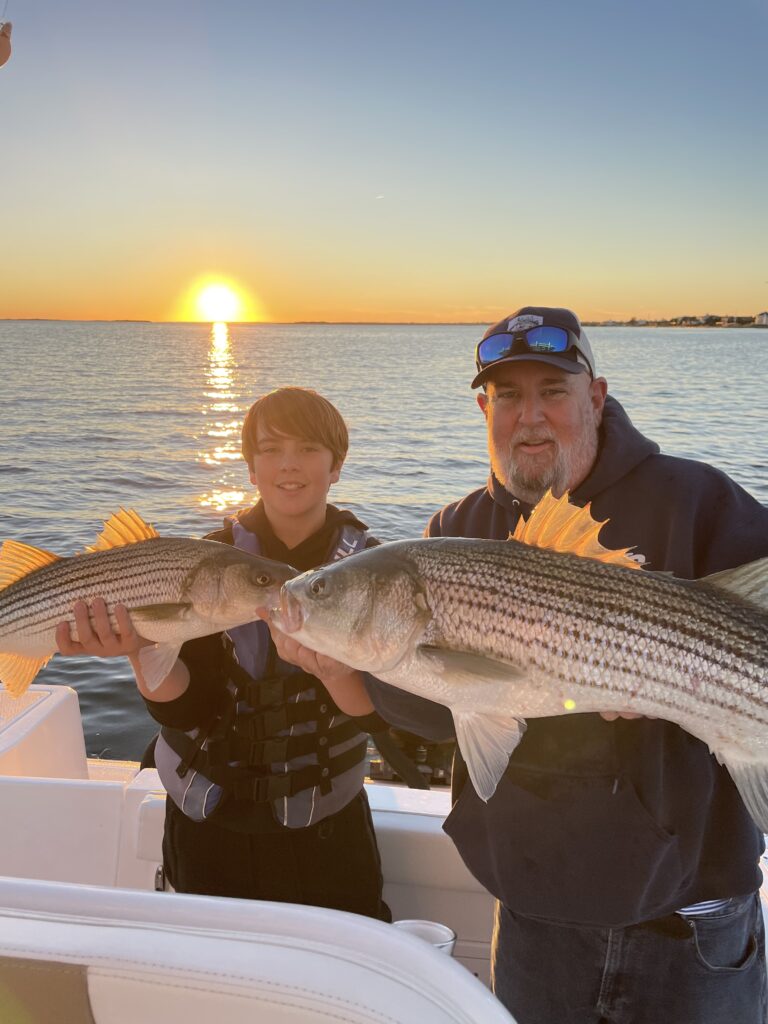
Striped bass remain the headline species during the first half of June to the west and all month to the east. Migrating fish continue moving on the South Shore beaches, while resident bass settle into rips, inlet mouths, and deep structure. Areas around Shinnecock Inlet, Montauk Point, and Gardiners Bay become prime locations for both surfcasters and boat anglers. Large schools of bunker, sand eels, and squid keep bass feeding heavily. Live bunker and drifting eels remain top producers for trophy fish, while bucktails, darters, and soft plastics dominate during moving tides. Early mornings and nighttime tides are usually most productive once the sun gets high. Reports across Long Island in spring 2026 already show strong bass numbers moving east, with many fish holding around bunker schools.
Bluefish arrive in force by late May/early June and often mix directly with bass schools. Some years bring massive “gator” blues pushing into the inlets, ocean beaches and flats in the bays. Aggressive feeding creates epic topwater action. Poppers, metals, epoxy jigs, and diamond jigs all produce explosive strikes. Around Montauk and the South Fork beaches, fast-moving schools frequently blitz bait on the surface, drawing birds and in turn the boats from nearby areas racing to cash in.
Fluke fishing becomes a major focus throughout June as the flatties spread across sandy bottoms, channels, and inlet edges. The Peconic, Gardiners Bay, and ocean structure off Montauk all hold quality fish. Drifting squid strips paired with spearing remains the classic method, but bucktails tipped with Gulp-style soft plastics have become dominant among serious fluke anglers. June is often the best month to catch larger fish before heavy boat traffic and warmer water scatter them deeper later in summer. Strong tidal movement is critical, especially around inlet mouths and drop-offs. Anglers drifting channels near Shinnecock and Plum Gut frequently encounter keeper-sized fluke mixed with sea robins and occasional weakfish. Fluke season traditionally opens in early May in New York waters, making June prime time for consistent action.
Porgies, aka scup, provide some of the most reliable fishing in June. Rocky bottoms, wrecks, and mussel beds throughout the North Fork and Peconic region hold enormous schools. Light tackle fishing with clam strips produces nonstop action and makes porgies perfect for families or anglers looking for a full cooler. Some of the best fishing takes place around Orient Point, Shelter Island, and the deeper structure near Plum Island. Mixed in with the porgies are often triggerfish, sea bass, and occasional weakfish. The debris from the old Tappan Zee Bridge that makes up the Hamptons reef, a short distance southwest of Shinnecock, is another solid spot to target scup,
Black sea bass season also becomes a major draw by late June. Wrecks and hard-bottom structure load up with aggressive sea bass feeding on crabs and baitfish. Diamond jigs, squid strips, and baited hi-low rigs work well. Sea bass fishing has grown increasingly popular because of being premium table fare, along with their aggressive strikes. Party boats across the Island begin focusing heavily on sea bass trips once regulations allow harvest.
Weakfish, aka unicorns, remain one of the more unpredictable but exciting June species. These fish favor quieter bay waters and current edges, particularly in the Peconic system and back bays around Orient and Shelter Island. Pink soft plastics, bucktails, and small swimming plugs work especially well during low-light periods. Some evenings produce outstanding action when weakfish move onto shallow flats to feed on grass shrimp and small baitfish. Although populations are far below historic levels, dedicated anglers still find quality catches every June.
June also marks the beginning of true mixed-bag fishing across the East End. It is common for anglers to catch striped bass, bluefish, fluke, porgies, and sea bass all in one outing. The mix of species keeps fishing exciting because changing tides and locations can completely alter what you encounter. One drift may produce keeper fluke, while the next is interrupted by feisty blues or striped bass feeding underneath bunker schools.
Whether fishing from the beach, a kayak, a center console, or a party boat, June on the East End delivers variety, action, and some of the best saltwater fishing conditions of the year. The combination of migrating bait, moderate water temperatures, and active predators creates a month where every trip holds the possibility of a memorable catch.