
March on Long Island has a certain restless energy. Cold mornings and gray skies have been the norm, but not for much longer. Sunsets at reasonable hours, days of bright sun are crucial to warming up our waters after an epic winter. If you find your happiness on the water, March isn’t just another month on the calendar. Anticipation, preparation, and the slow ramp-up to the season are starting.
Migrating striped bass are still mostly south of us or deep in wintering holes. Resident schoolies begin stirring in estuaries and creeks in the back bays as muddy bottoms warm the water and small baits appear. They won’t move fast or strike aggressively, but patience and a slow retrieve may get that bite we’ve all been waiting for months. Some very cold and boring months.
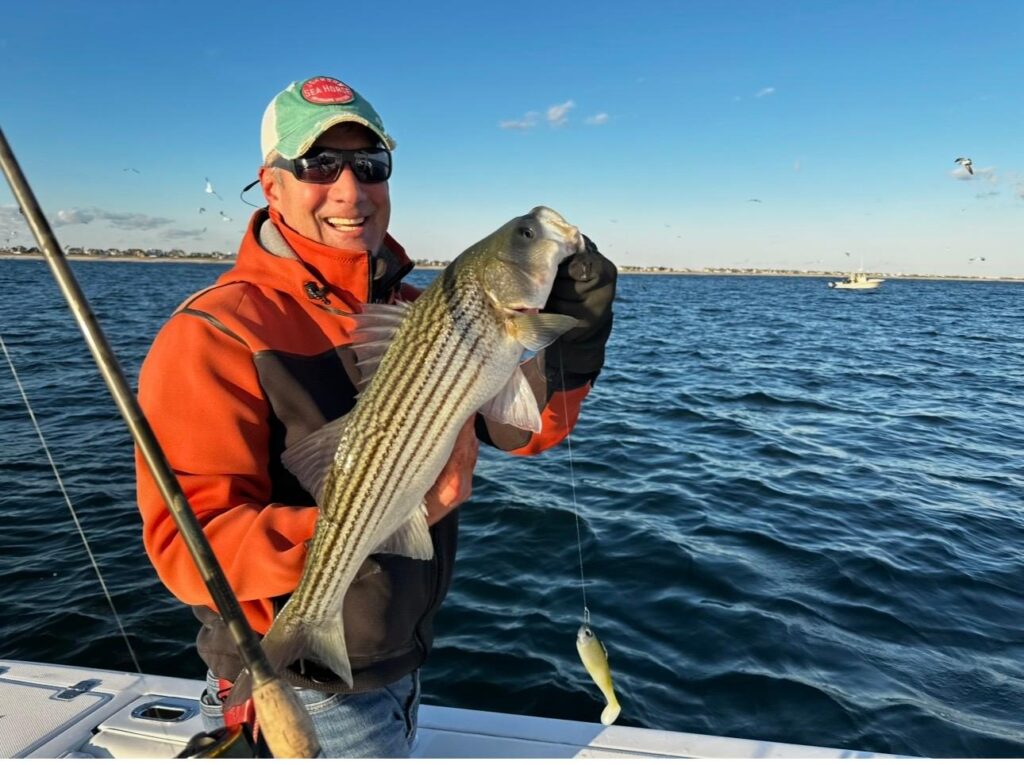
The back bays and estuaries are where March truly shines. Great South Bay, Moriches, Jamaica and the Peconic warm faster than the ocean, and draw in baitfish and the predators that find them to be delicious. Soft plastics, small jigs, and plugs can find fish on a mild afternoon, especially on sunny days when shallow flats absorb heat. The tides really matter this time of year. The bait is so small that the outgoing tide often triggers action as they drift away from hungry predators.
March is as much about preparation as it is about fishing. Launching your boat for the season is a ritual of excitement mixed with responsibility. After months on a trailer or in winter storage, your boat deserves a thorough inspection before it touches the water. Start with the basics: check the hull for cracks or damage, inspect through-hulls and seacocks, and ensure that drain plugs and fittings are secure. Your battery system should be tested and charged, and it’s a good idea to clean terminals and confirm that electronics power up correctly. March water temperatures around Long Island can be dangerously cold, so a mechanical failure is more than an inconvenience and a call to Sea Tow—it’s a safety concern.
The engine deserves special attention. Whether you run an outboard, inboard, or stern drive, check fluids, belts, hoses, and the fuel system. Fire extinguishers, flares, life jackets, and your bilge pump should all be checked or replaced as needed. Many seasoned anglers also update their registration, insurance, and safety documentation in March. Once the bite gets hot, the March checklist easily wanders from your head. The bay constable or coasties may not be too sympathetic throughout the season.
Once you clear the no-wake zone, the first trip of the season often feels more like a shakedown cruise than a hardcore fishing mission. Do the GPS, sonar, and radios function correctly? Are the live well pumps circulating water? Is the steering and throttle as smooth as they were chasing the scattering of stripers that were around? Many anglers will idle around the bay, checking systems and reacquainting themselves with the feel of the boat before heading out to fish. That quiet first ride, with the smell of salt air and the low rumble of the engine, is the sign that life is back to normal.
Fishing tactics in March lean toward finesse. The water is cold, and fish metabolism is slow. Smaller lures, slower retrieves, and patience are key. Soft plastics on light jig heads, small bucktails tipped with pork rind or soft trailers, and subtle suspending plugs can all produce. Drifting shallow flats on a sunny afternoon, watching the water temperature creep up a degree or two, can turn a quiet day into a memorable one.
March is also a time for reflection and planning. Anglers take stock of last season’s successes and failures, reorganize tackle boxes, retie leaders, and dream about the coming runs of stripers, bluefish, fluke, and tuna. If you broke your resolution last season to keep a log, keep the resolution to do it this year. The first fish of the year, even if it’s small, is something special. The long days of summer fishing are on the horizon.
There is something special about being on the water in March. Ospreys return to their nests, seals haul out on sandbars, and the first schools of baitfish flicker in the shallows.
Enjoy spring training, it will be playoff time in the blink of an eye. Remember to fish responsibly. Striper season doesn’t officially start until April 15, but catch and release only is allowed. Take off the rear treble on plugs, take time releasing all fish. Start things off right and they’ll finish off better.