It is no secret that for most of us, cocktails and boat drinks are part of the boating life, and this is no modern appellation. For centuries, the consumption of spirits onboard naval vessels was a commonplace practice, though more in the past for relieving the drudgeries of shipboard life than as consumed today purely for heightened pleasure. For the longest time, casks of beer (meads and the like, really) and wines were the drink of choice at sea, but for some reason, rum has become most synonymous with sailors and drinking. Ever wonder why?
Back in the heyday of piracy, tropically situated plantations and settlements were interspersed throughout the Caribbean, leaving them quite vulnerable to attack and occupation by the menacing sea rovers. As acknowledged above, the issuance of daily rations of “grog” to the crews of warships was not only allowed by the navies of the day, it was ordered by the commanders and admirals that the sailors be given daily rations… about the only high point of the day.
When on long extended voyages – particularly those which sought to chase down and capture pirates – it was not uncommon for a ship to run low on spirits, not to mention everything else. Like all boaters, even to this day when we run out of things while cruising we pull up somewhere to reprovision the ships stores. In the case of 17th and 18th century warships, these stops were made at the countless islands of the Caribbean which were doing big business in cultivating certain crops and then shipping them back to Europe. One of the primary exports was delicious sugar cane, the very substance which begins the process of the distillation of rum.
Very often the eddies and flows of history are much less glamorous and high minded than we were all taught in grade school. Most often, things happen or came to be simply because they presented a more practical symbiotic manifestation of the facilitations of trade and commerce. The situation was thus: the plantations were being plagued by pirates. The war ships kept the pirates away. The war ships also needed spirits to keep the crews happy and from deserting, otherwise they couldn’t fight the pirates. The plantations had plenty of rum and as long as they kept the warships provisioned, they could count on them hanging around. And so it came to pass that rum became most frequently equated with drink aboard ship. See, it’s all very simple sometimes.
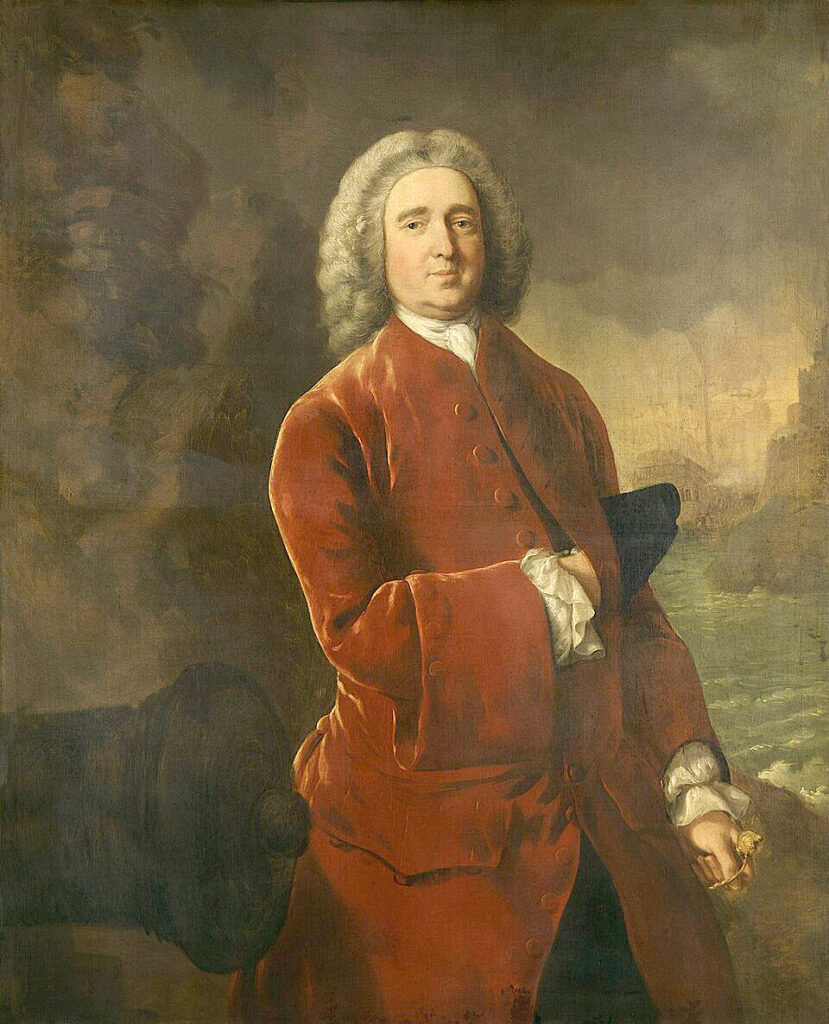
Backing up just a moment to the afore mentioned “grog”. The word was first applied to rum being cut with water, the practice attributed to Admiral Edward Vernon, commander of the British naval squadron in the West Indies in the year 1740. Vernon was well known for wearing a coat made of grogram cloth (a course fabric of silk, or mohair and wool, often stiffened with gum) and was thus nicknamed ‘Old Groggy’ or ‘Old Grog’. Following Britain’s Royal Navy tradition of providing sailors with a daily ration of rum in the 18th century, in 1794 the U.S. Navy established that sailors were to receive “one half-pint of distilled spirits” a day (½ pint = 8 fluid ounces, or one cup, or the equivalent of 5.3 shots by today’s standards). Then in 1806, the navy encouraged the sailors to accept whiskey as a substitute for the more expensive rum. Sailors who decided not to imbibe were paid an extra three to six cents a day. The ration was reduced to one “gill” (four ounces) in 1842 and then totally eliminated in 1862 during The War Between the States – though the Confederate Navy continued to provide its crews with rum rations, believing the tradition would help recruit much-needed experienced crews from other nations.
Until 1899, sailors were allowed to keep their own stock of beers and undistilled spirits at the discretion of the individual commanders, when even the sale of alcohol was banned to “enlisted men, either onboard ship, or within the limits of navy yards, naval stations or marine barracks, except in the medical departments.”
And, on the opposite side of the equation, ever wonder why a cup of coffee is often referred to as “a cup of Joe,” especially in the military? Well, like most navies of the time, the United States navy also served its crew regular rations of spirits, but the practice was ended on July 1, 1914 when then Secretary of the Navy Josephus Daniels – a North Carolinian teetotaler and supporter of the Temperance Movement – issued General Order 99, which banned “…the use or introduction for drinking purposes of alcoholic liquors on board any naval vessel, or within any navy yard or station.” Coffee then became the preferred alternative and so became known as “a cup of Joe.”
When the 21st Amendment (repealing prohibition) was signed into law in 1933, the navy conducted an informal poll of flag officers to determine if keeping the fleet alcohol free should be reconsidered. The poll’s results clearly indicated that naval leaders much preferred to continue prohibition on the ships, though the policy was later modified to allow alcohol on shore at stores and clubs.
However, in 1980, then Secretary of the Navy Edward Hidalgo modified the rule some, deciding to allow crew members of ships that have been out to sea for an extended period to each have two beers (later set to 45 continuous days). According to a letter by Captain Lawrence B. Brennan, published in Naval History Magazine, the surprise announcement to again permit limited beer onboard was prompted by Hidalgo’s experience aboard the USS ENTERPRISE during WWII when a Japanese kamikaze air plane crashed through an elevator and destroyed the ship’s cargo of beer.
And to wrap up, a few common expressions we owe to sailors and drink:
Three Sheets to The Wind:
Sheets on a ship are the lines that control the sails. If a sheet becomes loose and starts flapping in the wind, the ship will lurch and rock. Someone who cannot walk a straight line because they are staggering drunk is said to be “three sheets to the wind.”
Splice the Main Brace:
The main brace was the largest of the rigging on a ship and essential to controlling the vessel. A damaged main brace was difficult to repair, particularly in the midst of a battle which broke it in the first place, so it became customary for the crew members who successfully spliced it to be rewarded with an extra ration of rum, thus the expression came to be associated with a celebratory drink.
Binge:
To binge while on a ship meant to soak and rinse an empty cask in water. Sailors who needed more alcohol than their allotted ration would drink the binge water from the rum casks in the hope it would contain a few residual drops of alcohol. Binging also caused the wood to absorb water, much like a person “binge drinking” in the modern sense absorbs alcohol.
Down The Hatch:
When sailors tossed their heads back and poured alcohol down their throats, they equated it to the manner in which cargo was loaded on ships by lowering it through the hatches on deck.