It’s Feb 27th, and as I write this, we have hopefully just finished one of the coldest and snowiest winters in my ever so long life. I will give you one hint how long. Fiberglass boats weren’t even a dream when I was a kid. This winter has taken a significant toll on our docking and bulkheading facilities across the Mid-Atlantic and New England waterfronts.
I explored the waterfronts from Merrick to Sayville and along the Ocean Parkway communities and everywhere I went, there were pilings lifted high in the sky and in danger of falling. Docks were ripped from fastenings and if all the fastenings gave way, the melting ice and tides would be taking these docks out into the bays, only to be washed up on the bog or eventually make their way out of the inlet. Take this into consideration when you start boating in the spring. Keep a sharp lookout and tend to take it a little slow. You don’t want to run into a floating bulkhead whaler, a semi-submerged gang plank, or remnants of a yellow submarine. You just never know! If you come across any dangerous parts of dockage, etc., floating out there, call the bay constables or marine police so that they are aware and take care of the issue.
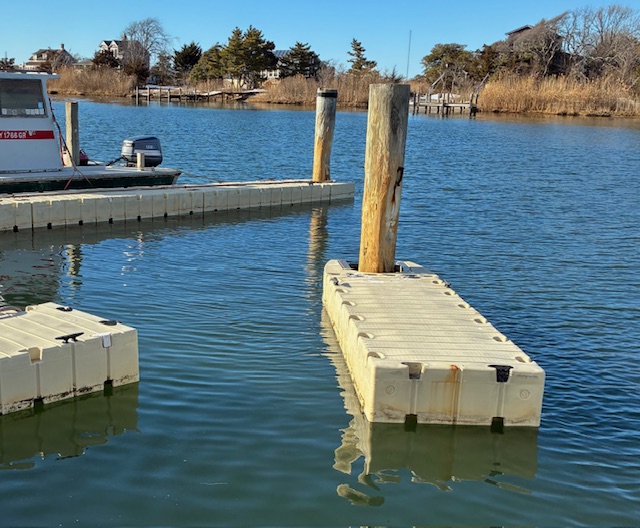
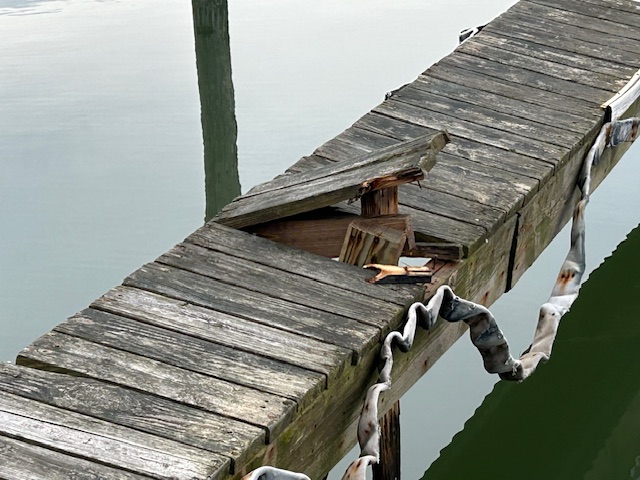
When inspecting your dock after a winter like this, check everything! You have to make an assessment as to what is fixable and what is not. If it’s questionable, don’t play around. Replace it. If it’s a wooden dock, check that the floatation underneath is stable. There are times the ice rips it away. At low tide, check your pilings where it enters the sand or mud. If they are beginning to rot through, replace them, or if they are long enough, have them flipped over. Check your connections on your floating docks to see if they need replacement and or repositioning for more strength. If you’re using chain, the best galvanized today is garbage, so check them carefully. When in doubt, throw it out. Next, examine the decking. Screw any loose boards down, brush seagull droppings and all the remnants of their dinners. If you let a layer of sea scum build up, the dock can become slippery like an ice-skating rink when it rains, even in the summer. Never coat your dock’s surface with any preservatives when it is in the water. We don’t need more chemicals leaching into the water.
If you have a gang plank, make sure it is in tip-top shape. Double-check all fittings, planks, rollers, and railings. If you have an aluminum gang plank, don’t assume you are home free on repairs, especially when it comes to fastenings where it attaches to the bulkhead. While you are at it, you may as well check all your cleats and make sure they are tight. Ice cold weather and snow on your docks can do strange things and loosen those cleats you fastened just last year.
If you have a bulkhead after this brutal winter, you should do a thorough inspection, especially if the bulkhead is showing wear and tear. Even if it has been resurfaced to “Look nice,” the amount of ice we have had will tear up old wailers and use holes in the bulkhead boards to lift them out. If you have a newer poly bulkhead, check and see if there is any sign of buckling, which can, over time, turn into a major problem.
I know it sounds like a lot of work, so personally, I have found a way to minimize my efforts. I put my boat in early and then leave my house and go 20 miles east to Sayville, towing my rotten floating dock and switching it out in the dead of night with a fresh one. I haven’t gotten caught yet and I’ve done it five times in the last 40 years. I may also switch out my Oak Island dock this year. It made it through this harsh winter, but it’s getting a little sub-standard looking. I am not recommending this to any of my readers, as this is definitely illegal and could land you in jail. But for old Captain Eddie, “once a pirate, always a pirate” is what I say.I end with a big shout-out to “Operation Splash” crew members and their leader, Capt. Rob Weltner, who has a big job ahead of them cleaning up our bays after this winter. Look them up and become a member or just donate. They work out of Freeport and they do a big job for all of us boaters. Ph# 516-378-4770. Web-info@operationsplash.org
Soon I’ll be waving to you from my new dock which I obtained from Sayville!
Captain Eddy Smith (Retired)
Copyright 2026 by Mark C. Nuccio. All rights reserved. For complaints, contact – marksea46@gmail.com