
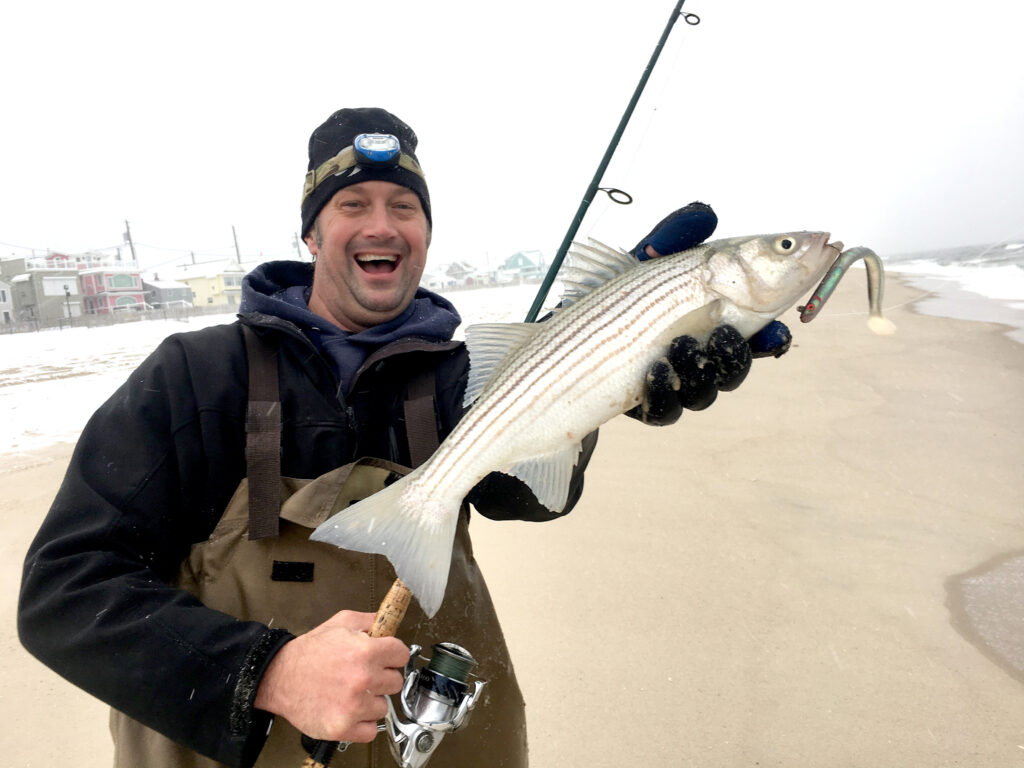
With the most frigid winter crushing Jersey in at least 15 years, everybody is chomping at the bit to get on with spring time, though it looks like its going to be a long wait the way February is going. However, March brings that promise of an actual turning of the tides when warmer weather begins to allow anglers to shake off the dust and get back out on the saltwater. Most anglers look with sheer anticipation of the reopening of the striped bass season in the backwaters on March 1st, and anglers can once again target them with a 1 fish limit between 28 and 31 inches. Winter flounder season also opens again with a 2 fish bag at 12-inch minimum size. White perch are littered in all the brackish and saltwater bays and river systems for some fantastic action.
RARITAN BAY
Man, its going to be a real crapshoot whether or not the Raritan Bayshore striper season forms up in March. With all the relentless ice and snowfall, there is going to be a major influx of freshwater once it all melts and that can impede the stripers to feed. Water temperatures were down to a chilling 34 degrees inside the bay, with ice flows and chunks resting like icebergs throughout the bay. If we somehow get a warming trend in early March, the bass should be at their perennial haunts inside the bay. The Raritan River outflow by South Amboy and Perth Amboy are a fine place to start prospecting for bass with bloodworms cast out from the shoreline, or for dropping back from a chum slick on a boat. Usually, hardy anglers can find one or two fish hitting plugs or shads, but that doesn’t seem likely until water temps get up past the 54-degree mark. Many times, the stripers will hold up on the flats outside of Keyport or Morgan creek to catch the sun’s rays and warm up. You don’t have to be the early bird to target bass in March as sometimes it takes the warming waters under the sun for the fish to get active, usually after 9 AM. Though never really pursued much with any fervor any longer, winter flounder could very well be hanging on those same flats as they will eagerly nibble on bloodworms or sandworms so long as you get a well-established clam chum slick to get them interested.
NORTHERN COAST
Normally, the Shrewsbury and Navesink River systems are the hot ticket to hook into the first stripers of the year, but last year’s run in the rivers was deflating to say the least, with barely any steady show of fish or bunker in the backwaters to bring them in. You never know year to year what happens, but we can hope for a rebound this March. If so, the first stripers will hit plugs such as Yo Zuri Mag Darters, Spooks, Rapalas and other plugs with white or yellow being the go-to color pattern in the darker waters. Those that have their boats in the water by now will try to find bunker schools along the coast from Sandy Hook down through Manasquan Inlet, dragging shad bars, bunker spoons and Stretch plugs to find a strike. A main target for Shark River anglers is the winter flounder as they tend to stack up in the shallower waters during the daytime to warm up in the sunshine. A well-defined clam chum slick should get them biting. Try and move to various spots in the river like the Tenis Court flats of 5 to 8 feet, the channel edges and back by Shark River Hills Marina. Bits of bloodworms or sandworms are the key baits, but you definitely have to get the bite going with plenty of chum dispersed. Late in the month, there may be some bluefish making their first move in, but that usually doesn’t start until April. For bottom fishing off the coast in the Mud Hole area, porgies and ling will be targeted with clam and squid baits.
CENTRAL COAST
The usual striper haunts of the Toms River and Manasquan River systems were literally covered with ice in February. It was unbelievable! That cold compress is going to make early season striper fishing tough at those locales but by the month’s end, striper fishing should be back on schedule as fish will hit slowly drawn white shads, plugs and mag darter type plugs. Most fish will be smaller in the 24-to-30-inch range before any migratory fish start to colonize the waters. However, one fish that wasn’t too affected was the white perch, especially in the Toms River. Whiteys are looking to hit bloodworms bits on pill float hi-lo rigs and they will generally chew at all hours of the day or night if you wing out a rig and some bait. I find that higher water tides have them biting a little better around the swings of the high tide hours. One usually productive species now in the area is the winter flounder, but you do have to put in your time. Flundies will hold in areas of upper Silver Bay by the Point Pleasant Canal entrance, down by the Mantoloking Bridge area and inside Barnegat Bay but they can be elusive to find. Once you do find a few biting, there are generally many more hanging with them. Best tides to dunk bloodworm or sandworm baits are mid-tide hours when the current is running strong so they can sit and pounce on any meals or forage floating by their faces. Use small #6 to #8 Chestertown hooks and chum with clam heavily.
OFFSHORE
Bluefin tuna have become the fish du jour in the past 5 years as they can come so close to shore you can see them vaulting out of the water in the surfline. If the blueifn season is open, and that is unpredictable day to day if its open or closed, you can target them in March with artificials. Many anglers try to toss big poppers to get strikes, or will drop down Ron-Z lures to jig them up to the surface. Other options for early season BFT include dragging ballyhoo baits way back in the spread. The BFT can be anywhere at any day, so many guys start by trying 8 to 15 miles offshore, then will move out further accordingly to find any new schools that have moved into the area. Giants are around in the early season as they migrate northward so 500-to-800-pound class fish need the heaviest and most capable of tackle if heading out. Smaller medium class BFT of 46 to 78 inches can also show up. Other than the tuna, early shots at golden tilefish on the canyon flats will have some guys out and about as will wreck fishing the 50-to-80-mile wrecks for cod and pollock.
It’s been a winter to remember, or forget for that matter, with insane subzero temperatures. We will have to wait and see what unfolds in March as the snow and ice melts and inundates the nearshore waters for a few weeks. But fear not! March will inevitably bring the first real action of the year in the saltwater to get us going.