
April marks the true beginning of the saltwater fishing season across Long Island. As water temperatures begin to climb and sunsets get later, our local bays, inlets and a few beaches come alive after too long of a winter slumber. It pains me to hear about the long-gone days of an April winter flounder bite. While it’s tradition or ritual for some to still target them the only game in town, one I personally love to play, is the spring striper run.
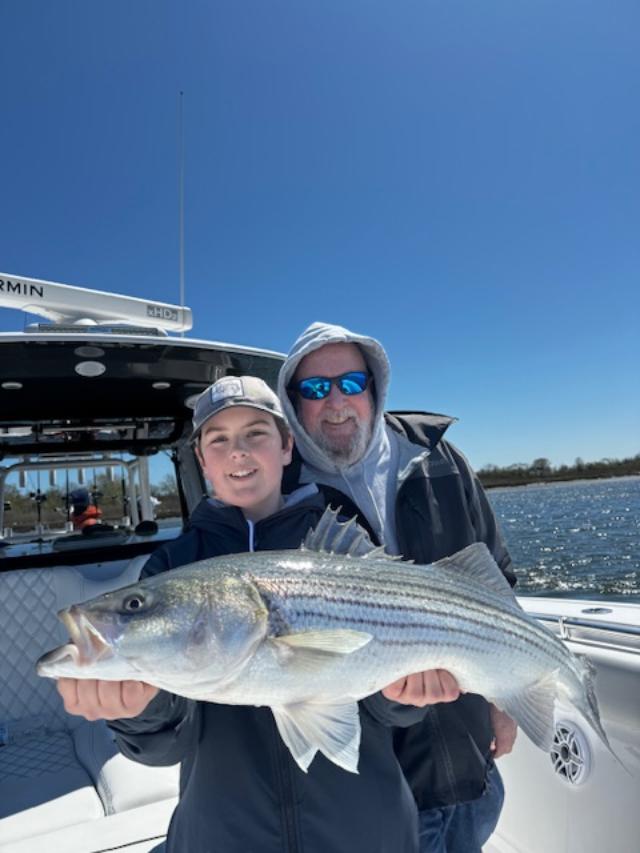
Striped bass fishing on Long Island in April is driven largely by the northward spring migration. After spending the winter months offshore or in deeper waters off the Chesapeake, striped bass begin moving north as water temperatures rise. Many of these fish travel toward spawning grounds in major river systems such as the Hudson River, while others follow the coastline and move into the Western Sound and South Shore bays from west to east. As longer sunny days warm the muddy bay bottoms triggering small baits and the resident schoolies they chase them, the bigger fish aren’t far behind.
Marsh creeks, harbors, and muddy flats produce the season’s first consistent bites. Small paddle tails and bass assassins match the small bait profile the smaller fish are ambushing. As the month progresses and water temperatures approach the low-50-degree range, the migrators start to make their way into the neighborhood. Inlets and surrounding bay areas at night are often an ambush spot for larger fish.
The whole key to starting off your bass season with a bang is matching the hatch. The earliest bait appearing in the back bays consists of small species such as minnows, spearing, and grass shrimp. These small baits emerge from winter dormancy as the water warms, creating the first buffet for stripers. Crabs and shrimp can also be around. After the brutal winter we had, the bass may not be as aggressive as water temps work harder than ever to hit that sweet spot. It doesn’t mean the bass won’t eat, but they conserve energy, swim slower and lower, and can get picky. The wide range of baits and profiles, while soft plastics should be in your rotation, small bucktails with a trailer mimic multiple profiles and give the added weight to stay near the bottom.
Sand eels aren’t a bait to count on in April, but there are years where they make a solid showing and in turn result in some great fishing. When they are around, thin profile soft plastic or tins are the right call
Most spring bass fishing starts out in the bays. In my home waters on the east end, Jamaica Bay anglers are already fishing the ocean where the big girls are smashing bunker pods while we’re playing catch and release with fish in the mid 20-inch range. A fish is a fish and I’m always happy to bend a rod, especially for the first few of the year. Part of the excitement that comes with spring fishing, is that it can turn on in the blink of an eye. Keep scouting the ocean by boat or beach. Look for splashes and gannets. These bass are hungry and have to fuel up constantly. Oily, stinky adult bunker is the perfect fuel once things line up.
The start of the season isn’t easy, but that makes the thrill of those first few fish even better. I don’t always have the luxury of timing my fishing with the tides as much as I’d like. Outgoing tide has always been much more productive. The water has been warming in the flats and shallows of the bays for hours vs. cold ocean water flowing in. Those smaller baits are easily pulled out of the creeks and crevices of the marshes, and for many it will be their last tide as stripers lay in wait ready to wreak havoc.
The anticipation of what’s ahead for the season hits its peak in April. Set goals, keep a log, be better than you were last season. We’ve all earned our shot to make this year the best one yet!