How a 19th-century record-keeping process became the most versatile art form in angling.
The White Lies That Sparked an Art Revolution
“It was this big!” Every angler has been there – arms stretched out, grin widening in unison with hands expanding further apart, showing the length of the latest monster that barely fit in the net. As all anglers know, there are more whopper stories than fish in the sea and much of angling lore has been stitched together with these heroic exaggerations – but did you know that we may owe an entire art form to that impulse?
Nearly two centuries ago, Japanese fishermen, searching for a way to prove the size of their catch, invented gyotaku (or simply fish printing). What began as a utilitarian ink print on paper, has since expanded from dockside record sheets to museum walls, research labs, and even the hulls of sportfishing boats. Today, gyotaku offers anglers a unique taxidermy option to immortalize their catch, scientists a precise biological record, and art lovers a striking view of underwater life.
This article dives into the samurai-era origins of the art form, its modern reinventions, and the many ways you can bring a bit of this time-tested craft onto your boat, your walls, or even the shirt on your back. So, to all the anglers who ever embellished the size of their catch, we would like to thank you!
Samurai Bragging Rights
Our favorite origin story began in Japan during the mid-1800s, when regional lords organized samurai fishing competitions. Even these warrior-anglers, who would rather face death before dishonor, stayed true to angler fashion and knew the stories of their fishing expeditions could grow suspiciously more impressive when it was time to report the day’s catch. To resolve disputes—and preserve reputations—they coated each fish in ink, pressed paper over the top of it, and voilà, gyotaku was born – providing us with an exact, life-size impression of the fish and all the proof necessary to declare a true winner.
Those early prints were purely documentary, but appreciation for their visually stimulating look began to evolve. The artists (often the anglers themselves) painted an eye onto the silhouette, scribbled length, weight, date, and location in the margin, then tacked the drying sheet to the fish-market door. Practical? Absolutely. But something about the crisp, high-contrast form—scales rendered like topographic lines, fins displayed in perfect symmetry against the paper—captured imaginations. Fishermen began gifting prints to friends. Merchants hung them in tackle shops. Soon enough, decorative gyotaku prints appeared in Kyoto tea houses.
A Taxidermy Alternative You Can Hangin the Living Room
While modern taxidermists have perfected lifelike mounts, nothing beats the authenticity of a direct contact print. And for the anglers who are forced to hide their replica mounts in the “back room,” a framed fish print typically receives a warm welcome onto living room walls with a more artsy feel.
There are two routes to securing your own fish print, which can be made by an artist or yourself:
- Traditional Ink Method
Commission a local gyotaku artist to meet you at the dock. You can find many of these artists through social media or by word of mouth at the closest tackle shop. After a brief rinse of the fish at the marina, the artist pads the fish dry, brushes sumi or acrylic ink across the body, positions washi paper on top of the fish, then rubs gently from head to tail. Once the paper has been peeled away, the sheet dries flat before the artist adds an eye and signature. The entire ordeal lasts about twenty minutes, yielding a wall-worthy memento. - Inkless Do-It-Yourself Kits
If you would like the experience of catching the fish and making the gyotaku print yourself or if brushes and ink sound tedious or messy, The PaperFin (www.thepaperfin.com) offers a do-it-yourself inkless fish printing kit for anglers of all ages. The process uses a non-toxic solution that is applied to the fish by the included towelettes, their specially coated paper is then placed on top of the fish and rubbed over like the traditional method. There is no inky mess or drying time and without the ink, most of the artistic abilities required within the traditional method have been reduced – leaving anglers with a memento that is more unique than a photograph, more affordable than a replica and ready to hang on the wall. We believe you will be happy with either path as they deliver a memento far richer than scrolling through a smartphone to show photos on a screen that fits in your pocket.
Turning Hulls into Floating Trophy Rooms
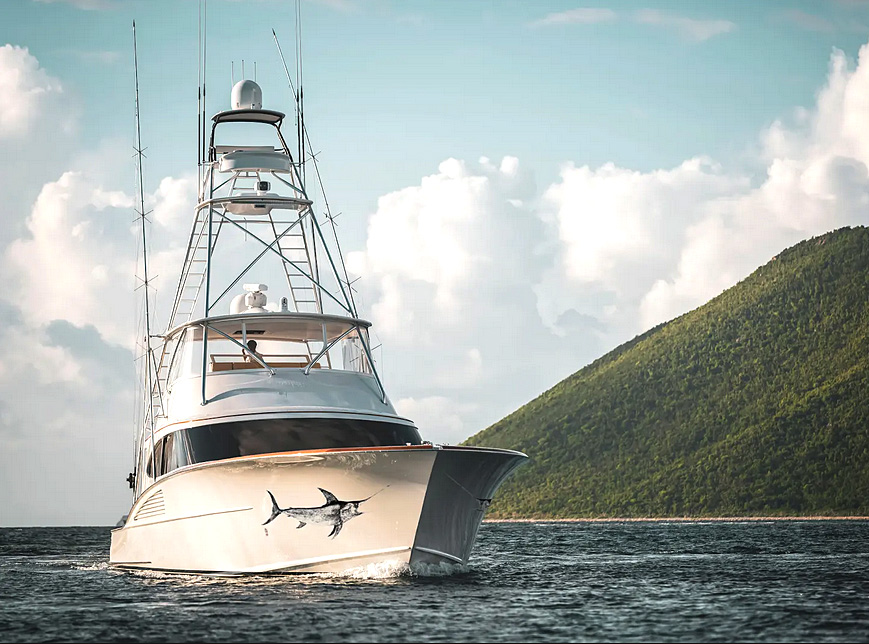
Why limit gyotaku to the walls in your house? Now you can put your boat on display with graphics of museum-grade artwork. The Gyotaku (www.thegyotaku.com) offers anglers the ability to turn their boat into a masterpiece. Ultra-high-resolution scans are made of original gyotaku artwork by master artist Dwight Hwang, capturing every detail of the piece and allowing for the highest quality reproductions to be printed on a durable and water-resistant vinyl base with UV-resistant and water-resistant inks. Anglers can even customize the size of the decal to match fish caught on the boat, turning their boat into an offshore trophy room.
Beyond bragging rights, the aesthetic carries pedigree. Many of the gyotaku prints available have debuted in maritime museums before they ever hugged fiberglass. The Gyotaku strives to give boat owners the ability to showcase the fish they love to catch right on their vessel!
Science Prints: When a Rare SpecimenWashes Ashore
The precision of gyotaku is not lost on marine biologists. Institutions such as NOAA and Scripps Institution of Oceanography periodically enlist master artist Dwight Hwang to document deepwater oddities within hours of beaching. You might remember the 30th Pacific footballfish (type of Anglerfish) that washed ashore and went viral due to its rarity and nightmarish looks – Dwight was requested to make gyotaku records for historical and scientific purposes. These prints are works of art that also provide reference sheets filed alongside genetic samples at leading scientific and historical organizations.
Casting Forward: Ink, Honor, and the Endless Fish Tale
From samurai scorecards to Smithsonian galleries, gyotaku proves that even the simplest tools—ink, paper, a freshly caught fish—can transcend function and become storytelling gold. Next time you boat a personal best, consider inviting a gyotaku artist to the dock or grab an inkless do-it-yourself printing kit. Within minutes, you’ll possess not just proof of size, but a keepsake steeped in nearly 200 years of angling tradition.
And remember, embellishing will always be part of the sport. Stretch your arms, let your buddies raise an eyebrow, just know that should a modern-day samurai demand evidence, you’d better have your gyotaku ready as evidence. The print won’t lie—and neither, will you, for once.